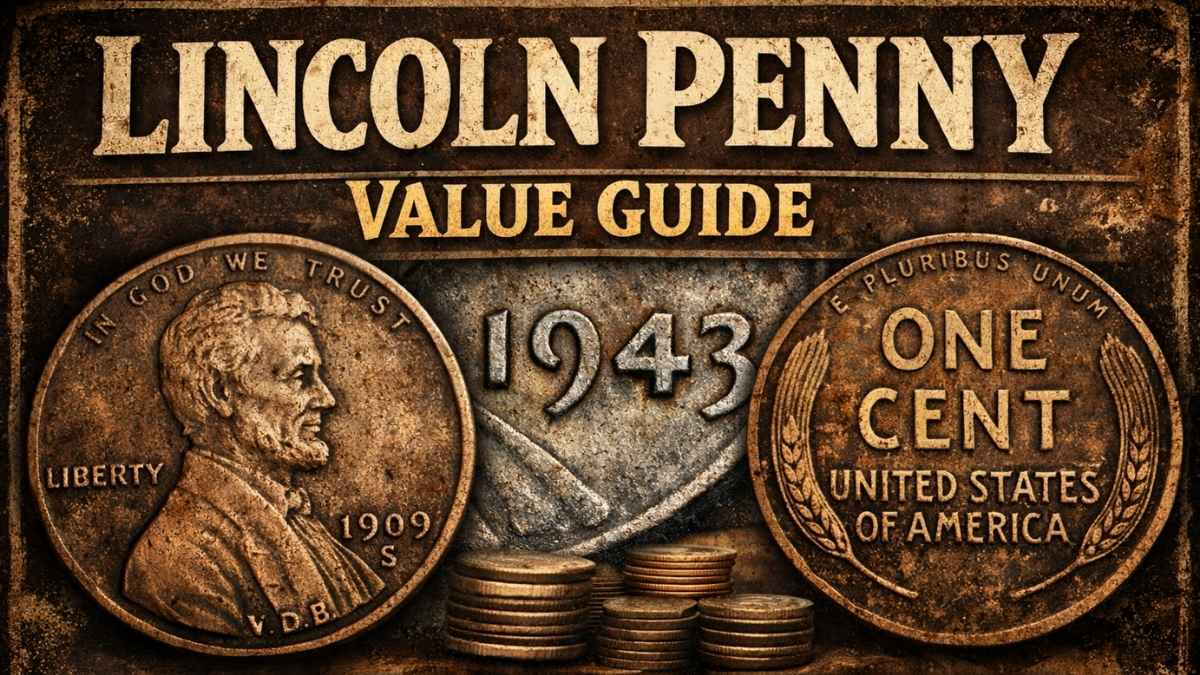
Lincoln Penny Value Guide 2026: The Lincoln Penny, first minted in 1909, is one of the longest running coin series in American history. Designed by Victor David Brenner, it was the first U.S. coin to feature a real person, honoring President Abraham Lincoln on the centennial of his birth. Over the decades, the Lincoln Penny has undergone design changes, from the Wheat reverse to the Memorial and later the Shield. In 2026, collectors continue to search for rare varieties that can still be found in circulation, some of which are worth thousands or even millions of dollars.
Why Lincoln Pennies Are Valuable
The value of a Lincoln Penny depends on rarity, condition, and historical context. Certain dates and mint marks were produced in limited numbers, making them scarce. Minting errors, such as doubled dies or wrong planchets, add another layer of rarity. Condition is critical, with coins in Mint State or Proof grades commanding high premiums. Together, these factors make Lincoln Pennies both collectible and valuable.
12 Rare Lincoln Pennies Still Circulating
Although most Lincoln Pennies are common, there are twelve rare varieties that collectors dream of finding in pocket change. These include:
- 1909‑S VDB, the first year of issue with designer initials.
- 1914‑D, a scarce early date.
- 1922 No D, a fascinating error coin.
- 1931‑S, produced in very low numbers.
- 1943 copper penny, mistakenly struck when most were steel.
- 1944 steel penny, another wartime error.
- 1955 doubled die, famous for its dramatic doubling.
- 1969‑S doubled die, a modern rarity.
- 1972 doubled die, highly collectible.
- 1982 small date copper, transitional variety.
- 1992 close AM, a rare design variation.
- 1999 wide AM, another design rarity.
These coins represent the pinnacle of Lincoln Penny collecting and are essential for serious enthusiasts.
Mint Marks and Their Impact
Lincoln Pennies were produced at several mints, including Philadelphia, Denver, and San Francisco. Mint marks can be found below the date on the obverse. Coins without a mint mark were struck in Philadelphia. Collectors pay close attention to mint marks, as they can dramatically affect rarity and value. For example, the 1914‑D is far more valuable than the 1914‑P or 1914‑S.
Grading and Condition
Grading is the process of evaluating a coin’s condition. Lincoln Pennies are graded on a scale from Poor (P‑1) to Mint State (MS‑70). High‑grade coins with sharp details, minimal wear, and original luster are highly prized. Red coloration is especially important, as copper coins often tone to brown over time. Coins designated as Red (RD) can sell for multiples of the price of similar coins graded Brown (BN) or Red Brown (RB).
Collecting Strategies
For new collectors, starting with common dates in circulated condition is a practical approach. These coins are affordable and provide a foundation for learning about the series. As experience grows, collectors can pursue rarer dates and higher grades. Building a complete set from 1909 to the present is a rewarding challenge, though acquiring certain key dates may be difficult. Many collectors choose to specialize in Wheat Pennies, Memorial Pennies, or error varieties to make the hobby more manageable.
Easy Tips for Beginners
Collecting Lincoln Pennies does not have to be complicated. Here are some simple tips:
- Begin with circulated coins from pocket change to build familiarity.
- Learn to identify mint marks and key dates.
- Use a magnifying glass to check details such as doubling or design variations.
- Store coins in protective holders to prevent damage.
- Read numismatic guides and join coin clubs to gain knowledge.
These steps help beginners build confidence and enjoy the hobby without overspending.
Market Trends in 2026
The coin market in 2026 shows continued interest in classic American series. Lincoln Pennies remain popular due to their beauty and historical significance. Prices for common coins are stable, while rare versions continue to appreciate. Auction houses report strong demand for high‑grade examples, especially those with Red coloration. The $6.1 million sale of a 1943 copper penny has reinforced the perception of Lincoln Pennies as valuable investments.
Historical Significance
Beyond their monetary value, Lincoln Pennies represent a period of American history marked by resilience and change. The design, featuring Lincoln, was the first time a U.S. coin depicted a real person. The reverse designs, from Wheat to Memorial to Shield, symbolize prosperity, national pride, and strength. Collectors appreciate these coins not only as artifacts of commerce but also as works of art that embody national ideals.
Challenges in Collecting
While collecting Lincoln Pennies is rewarding, it also presents challenges. Counterfeits exist, particularly of rare dates and minting errors. Collectors must learn to authenticate coins or rely on professional grading services. Prices for high‑grade examples can be prohibitive, making it difficult to acquire the rarest coins. Patience, research, and careful purchasing are essential for success in this hobby.
The Joy of Coin Collecting
For many, the true value of Lincoln Pennies lies not in their price but in the joy of collecting. Each coin tells a story of history, artistry, and human effort. Holding a Lincoln Penny connects the collector to a past era, offering a tangible link to the people who once used it in daily life. The pursuit of rare coins, the thrill of discovery, and the satisfaction of building a collection make numismatics a deeply fulfilling hobby.
Conclusion
The Lincoln Penny Value Guide 2026 highlights the enduring appeal of this classic coin series. With twelve rare examples still circulating, key dates commanding attention, and easy collecting tips available for beginners, the Lincoln Penny remains a cornerstone of American numismatics. Whether pursued for investment, historical interest, or simple enjoyment, these coins continue to inspire collectors around the world.